The age of agentic DXPs: Why Optimizely's lean innovation model is winning
Graham Carr, Platinum OMVP
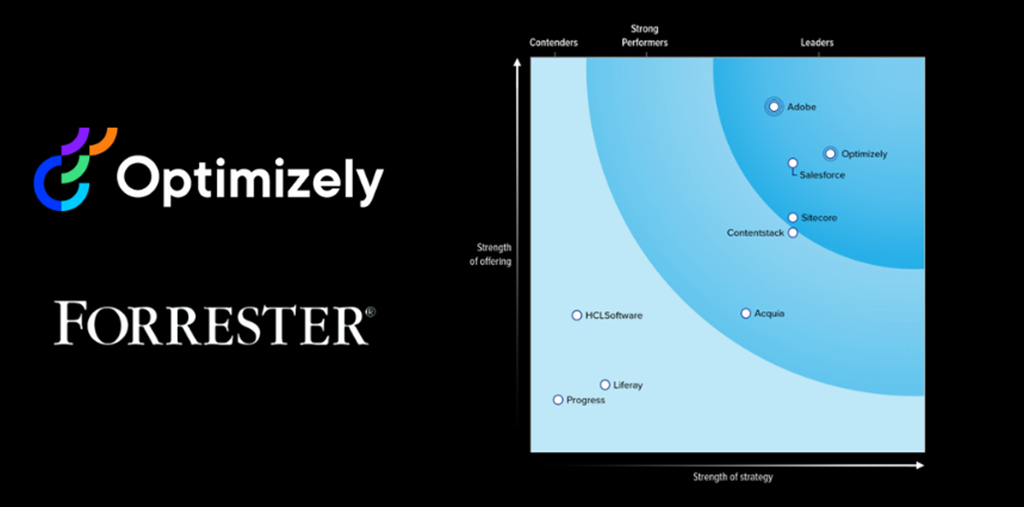
The latest Forrester Wave™ for Digital Experience Platforms (Q4 2025) reveals a fascinating shift in market dynamics. While Adobe holds the "Customer Favourite" designation and Salesforce leverages its massive installed base, it's Optimizely's approach that offers the most compelling vision for where the industry is headed. The company's position as a Leader -outpacing even established players like Sitecore-signals that in the age of AI agents, being lean and focused beats being large and legacy-bound.
The Opal Advantage: Autonomous Orchestration as Competitive Edge
Optimizely's secret weapon is Opal, its standalone agent orchestration platform. While other vendors are still bolting AI capabilities onto existing architectures, Optimizely built an AI-native orchestration layer from the ground up. This isn't just about having AI features-it's about having AI that can autonomously execute marketing workflows across the entire stack without constant human intervention.
Consider the contrast with Sitecore. Despite Sitecore's "superior scores for search and agent orchestration framework" and its long-standing Autopilot investment, customers report confusion around packaging and licensing. This reveals a fundamental challenge: excellence in individual capabilities means little if the overall experience is fragmented. Sitecore may have powerful tools, but Optimizely has built a more coherent, accessible platform.
Speed as Strategy: The Statsig Campaign Revelation
Perhaps nothing illustrates Optimizely's advantage better than its response to OpenAI's Statsig acquisition. Launching a competitive campaign within hours demonstrates more than marketing agility - it shows a company that genuinely uses its own platform as intended. This "drinking your own champagne" approach means Optimizely's innovations are battle-tested before reaching customers.
Meanwhile, Forrester notes that Sitecore is "slowing investment in digital commerce and divesting core marketing automation." This strategic retreat, while perhaps prudent for focus, creates gaps that enterprises must fill through partnerships and integrations - adding complexity precisely when businesses need simplification.
The Lean Team Paradox
Counterintuitively, Optimizely's "lean team" approach, highlighted by Forrester as a strength, may be its greatest strategic asset. In an era where every vendor claims AI transformation, Optimizely proves that a smaller, focused team wielding intelligent automation can outmanoeuvre larger, traditional organisations.
This efficiency translates directly to customer value. While Sitecore customers cite "confusion around packaging, licensing, and internal coordination across Sitecore teams," Optimizely users praise the platform's cohesion and "roadmap momentum." The message is clear: in 2025, organisational agility matters more than organisational size.
The Composability Trap
Both vendors embrace composable architectures, but their execution diverges significantly. Sitecore offers "extreme flexibility" in digital commerce but lacks the frontend accelerators to make that flexibility accessible. It's like providing a Formula 1 engine without a steering wheel - powerful but impractical for most drivers.
Optimizely, by contrast, has built what Forrester calls a platform with "great strength in practitioner tools." This isn't about having fewer capabilities; it's about making capabilities usable by actual marketing teams, not just developers.
Looking Forward: The Adoption Challenge
Forrester's report highlights a crucial industry challenge: "The pace of AI innovation has outstripped enterprise readiness." This is where Optimizely's approach shines. By creating tools that marketing teams can use today - rather than theoretical capabilities requiring extensive transformation - Optimizely addresses the real bottleneck in digital experience evolution.
Sitecore's pivot from "developer roots to focus on AI-powered content orchestration and marketer enablement" suggests recognition of this reality, but pivots take time. Optimizely, having built for this future from the start, enjoys a first-mover advantage that's difficult to overcome.
The Verdict
The Forrester Wave validates what forward-thinking enterprises are discovering: in the shift from composable to agentic platforms, execution beats aspiration. Optimizely's leadership position isn't just about having AI - it's about having AI that works, in a platform that's coherent, with a team that moves at the speed of modern business.
For enterprises evaluating DXPs, the implication is clear. The question isn't whether you need agentic capabilities - you do. The question is whether you want a platform that's ready now (Optimizely) or one that's getting ready (Sitecore). In a market where, as Forrester notes, "platform vendors must now prove their own mastery," Optimizely has provided that proof.
The age of checking feature boxes is over. The age of orchestration excellence has begun. And in this new era, Optimizely's focused, lean, AI-native approach isn't just winning - it's defining what winning looks like.
Learn more about why Optimizely is a leading DXP and download the full Forrester report.
-
Migrate from Sitecore to Optimizely - Without the barriers
If you’re running legacy Sitecore 10, you already know: the next upgrade isn’t just a patch. Moving to Sitecore XM/XM Cloud requires a significant rebuild - often, organisations invest heavily just to replicate what they already have.
Now is the perfect time to ask:
“Is Sitecore still the right platform for us?” -
From silos to synergy: what Forrester’s new TEI study really reveals about Optimizely One
Every so often, a research report comes along that doesn’t just deliver data—it holds up a mirror to where digital experience truly stands. Forrester’s new Total Economic Impact™ (TEI) study on Optimizely One feels like one of those moments.